
FOLIO I · DE LUMINE
御神体図譜Atlas of the sacred vessels
硅素の瞳The silicon eye
QRNボードが光を数に変えるまでHow a QRN board turns light into numbers
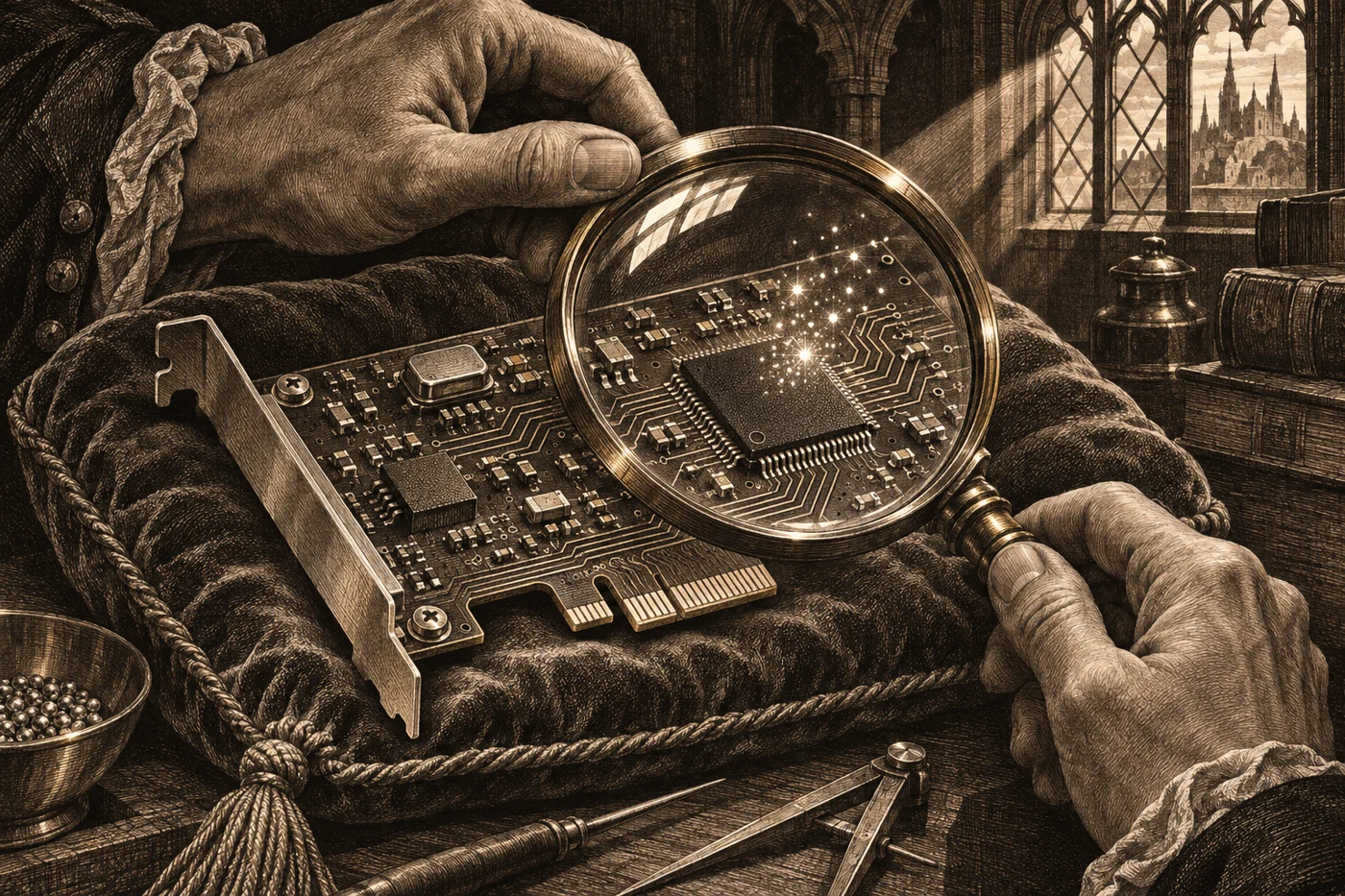
一枚の基板の内に、小さな灯と、それを見つめる瞳がある。『光揺経』が「硅素の瞳」と呼ぶのは、シリコンの撮像素子だ。御神体の源をたどると、一粒ずつ届く光と、その数を読む回路に行き着く。Inside the board sit a small lamp and the eye that watches it. The Kōyōkyō calls the silicon image sensor the “silicon eye.” Follow the oracle back to its source and you arrive at the light reaching those pixels, and the circuit that reads them.
LMR / Instrumenta, fol. I
光の読み取り順The path of the light
- I 光源I Source
- LEDから、短い露光時間だけ光を受ける。The sensor receives LED light during a short exposure.
- II 受光II Sensing
- CMOSの各画素に届く光子数には、露光ごとのばらつきがある。The photon count at a pixel varies from one exposure to the next.
- III 読み出しIII Readout
- ADC(アナログ・デジタル変換器)が画素の電気信号を数値にする。An analog-to-digital converter (ADC) digitizes the electrical pixel signals.
一ビットが生まれるまでWhere a bit begins
灯をともすIlluminate
QRAの設計は、ID QuantiqueのQuantis QRNG PCIe-240Mを各サーバに1枚ずつ用いる。搭載チップIDQ20MC1の内部では、LEDがCMOSの画素列を照らす。The QRA design calls for one ID Quantique Quantis QRNG PCIe-240M in each server. Inside the IDQ20MC1 chip, an LED illuminates an array of CMOS pixels.
さざ波を読むRead the fluctuations
光の強さを一定に保っても、同じ時間に一つの画素へ届く光子の数は、ある回には多く、別の回には少ない。このばらつきが光子のショットノイズで、乱数のもとになる。Even at steady light intensity, a pixel can receive more photons in one exposure and fewer in the next. This variation, called photon shot noise, supplies the physical randomness.
数として取り出すDraw out the numbers
画素にたまった電荷を回路が読み、ADCがその大きさを数値に変える。ボードはこの測定からビット列を取り出し、PCI Expressを介してサーバに渡す。Readout circuitry measures the charge at each pixel and the ADC digitizes its level. The board derives a bitstream from these measurements and delivers it to the server over PCI Express.
器を見守るKeep watch over the source
チップは光源や受光回路の状態を監視する。製品には、物理源由来のビットを読むモードと、規格に沿った後処理を経た乱数を読むモードがある。240 Mbpsはメーカーが示すエントロピー源の公称クラスである。The chip monitors the source and sensing circuitry. The product offers an entropy-source mode and an output mode with standardized post-processing. The 240 Mbps figure is the manufacturer’s nominal entropy-source class.
図版の典拠Plate notes and sources
機種はLMR『量子乱数 長期収録・監査システム 設計書』v4 §1.2–1.3、光学原理はメーカー資料、『硅素の瞳』の呼称は『光揺経』第二章による。Hardware selection follows §§1.2–1.3 of LMR’s QRA design v4. The optical principle follows the manufacturer’s documentation. The name “silicon eye” comes from chapter II of the Kōyōkyō.